Disclosure: If you buy through links on this page we may earn an affiliate commission, at no extra cost to you. It never changes our rating or what we recommend. As an Amazon Associate we earn from qualifying purchases. Read the full disclosure.
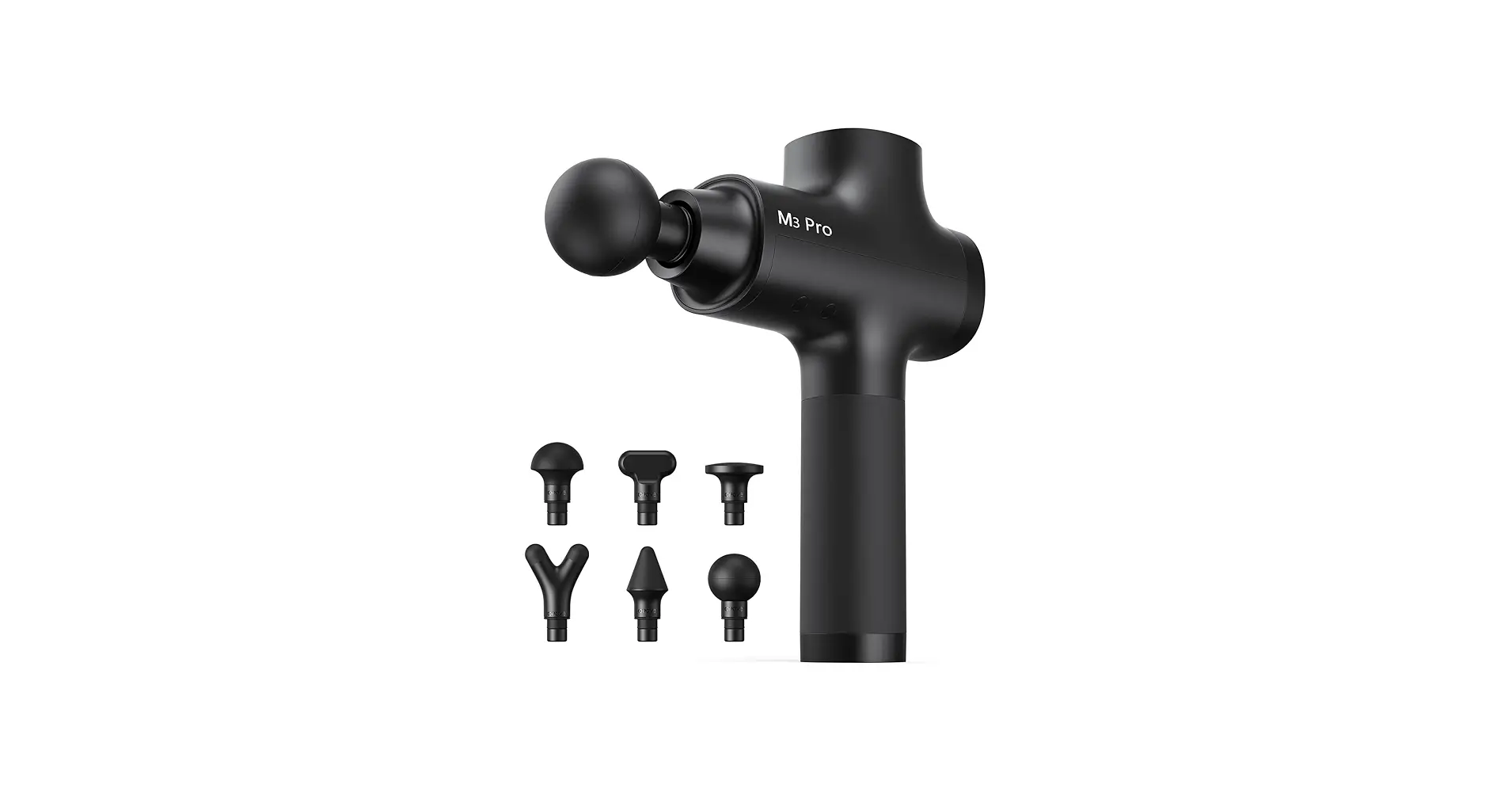
Opove M3 Pro 2 Review: Good for Upper-Body Knots, Underpowered for Glutes
Independent testing has never reproduced the advertised 70 lb stall force. Strong on traps and rhomboids, underpowered for glutes.
A well-priced upper-body massage gun that has been marketed as a deep-tissue one. No independent tester has ever reproduced the advertised 70 lbs of stall force; hands-on assessments put it around 40–50 lbs, and amplitude at 12mm — below the 16mm and 60 lbs that glute and hamstring work needs. For trapezius, rhomboid, neck, forearm and calf knots it is genuinely good, and at 46 dB on low speed it is quiet enough to use in a shared room. Buy it for desk-worker knots. Do not buy it for deep muscle.
Specs
Amplitude: 12 mm (caliper-verified)
Stall force: 40-50 lbs estimated (70 lbs claimed, never verified)
Genuinely capable on traps, rhomboids, forearms and calves
Quiet at 46 dB on low speed - usable in a shared room
Includes a fork head that keeps percussion off the spine
Strong value for the measured performance at around $130
Cons
Stall force measures 40-50 lbs, not the advertised 70
12mm amplitude cannot reach glute or hamstring trigger points
T-shaped body causes wrist strain and awkward upper-back reach
Real battery life is roughly half the advertised figure
One-year warranty is short for this bracket
The Opove M3 Pro 2 is one of the most recommended budget massage guns on Amazon, and for upper-body muscle knots it earns that. But the number Opove leads with — 70 lbs of stall force — does not survive independent measurement, and the gap matters a lot depending on which muscle you are trying to release.
The verdict
Buy it if your knots are in the upper trapezius, rhomboids, neck, forearms or calves, you want something quiet enough to use in a shared room, and you are spending around $130 rather than $400.
Skip it if your problem is glutes, hamstrings, quads or a thick-muscled back. At 12mm amplitude and a measured stall force below the 50 lb threshold, it stalls out in dense tissue exactly when you lean into it. That is a physics limit, not a quality complaint, and no amount of pressing harder fixes it.
What a muscle knot actually needs from a massage gun
A myofascial trigger point is a tender nodule sitting inside a taut band of muscle fibre — often described as feeling like a pea under the skin. Releasing one means delivering sustained pressure into the band until it lets go. Everything else a massage gun advertises is secondary to whether it can do that.
Two specifications determine that, and neither is the one most listings shout about.
Amplitude is how far the head travels on each stroke, measured in millimetres. It sets how deep each percussion reaches. 10–12mm is fine for muscle close to the surface. 16mm is what you need for glutes and hamstrings.
Stall force is how much pressure the head can take before the motor bogs down and stops moving. This is the one that matters most, because it decides whether the gun keeps working once you press it into the knot. Below roughly 50 lbs, most guns slow noticeably under real pressure.
Percussions per minute — the number brands print largest — tells you almost nothing about depth. A fast, shallow stroke that stalls under pressure will not release a trigger point no matter how high the PPM figure is.
Advertised versus independently measured
We have not tested this device ourselves and we do not pretend otherwise. The figures below come from Massage Gun Advice, who handle these guns directly. One important caveat they are open about: amplitude is measured with a digital caliper and is reliable, but stall force is not instrumented — it is estimated by comparing the gun against benchmark devices by hand. So treat the amplitude figure as fact and the stall force figure as an informed estimate. What nobody disputes is that no independent tester has ever reproduced Opove’s 70 lb claim.
Specification
Opove claims
Independent testing
Amplitude
12 mm
12 mm — caliper-verified
Stall force
Max 70 lbs
Estimated 40–50 lbs — never instrumented
Speed range
1300–2500 RPM
1300–2600 PPM — confirmed
Noise
Under 55 dB
46 dB low, 62 dB high
Battery life
4–8 hours
2.5–4 hours
Weight
2.43 lbs
2.5 lbs with ball head
Three of the six headline numbers overstate the product. The stall force claim is the significant one: 70 lbs would put this in the same class as a Theragun Pro, which costs four times as much. Every independent assessment places it well below that, and below the rough 50 lb line where a gun starts holding its speed against heavy pressure. Worth knowing that stall force figures vary wildly between testers depending on push angle and attachment — there is no industry standard — so treat any single number as a ballpark rather than a specification.
None of that makes it a bad device. It makes it a correctly priced device that has been marketed as something more expensive.
Which muscles this actually works on
Match the tool to the tissue depth and this becomes a straightforward decision.
Muscle
Works?
Why
Upper trapezius
Yes
Sits close to the surface; 12mm is more than enough and you cannot safely press hard here anyway
Rhomboids / between shoulder blades
Yes
Shallow muscle, but you will need someone else to hold the gun or a long-handled grip
Forearms and calves
Yes
Thin muscle bellies; stall force is rarely the limiting factor
Pecs and lats
Mostly
Fine at moderate pressure; may bog down if you lean in hard
Quads and IT band area
Marginal
Dense tissue starts to slow the motor; usable but not authoritative
Glutes and piriformis
No
Deep muscle under a fat layer. Needs 16mm amplitude and 60 lbs to make contact that matters
Hamstrings
No
Same problem — the stroke does not reach and the motor stalls under the pressure required
If your knots are the classic desk-worker pattern — upper traps, levator scapulae, rhomboids, neck — this covers essentially all of it. If you are an athlete chasing glute and hamstring trigger points, this is the wrong purchase and you should spend the extra on a 16mm device.
The attachments that matter for trigger points
Six heads ship in the box. For knot work specifically, three of them do the job and the rest are packaging.
Ball head — general warm-up over the muscle belly. Use this first to bring blood into the area before you go looking for the knot.
Bullet / cone head — the one that actually reaches into a trigger point. Small contact area concentrates the force. Use it sparingly; it is easy to overdo and leave yourself sore for two days.
Fork head — designed to straddle the spine so the percussion lands on the erector muscles either side rather than on the vertebrae. Never run a ball head down your spine.
Noise, in practice
The “under 55 dB” claim holds at low speed and breaks at high speed, where it measures 62 dB — roughly conversation volume. That is genuinely quiet for a percussion device and it is one of the few areas where this gun outperforms its price bracket. You can use it on the sofa next to someone watching television. You cannot use it on a video call.
Where it falls short
The T-shaped body. Reviewers consistently flag wrist strain during longer sessions, and the shape makes self-treating your own upper back awkward — which is, unhelpfully, the exact place most people have knots.
Battery reality. 2.5–4 hours of real use rather than the advertised 4–8. Still weeks of normal use between charges, but the claim is inflated.
The stall force gap. Worth repeating because it is the one that changes buying decisions. Do not buy this expecting Theragun-class power.
One-year warranty. Below what several competitors in this bracket offer.
How to actually use it on a knot
Most people use a massage gun far too aggressively and conclude it does not work.
Start on the lowest speed with the ball head and float the gun over the whole muscle for 30–60 seconds. No pressure — let the weight of the device do it.
Find the tender spot. It will feel distinctly different from the tissue around it and often refers pain elsewhere.
Hold light-to-moderate pressure on that spot. Clinical self-release guidance for sustained pressure sits in the range of roughly 10–60 seconds, or until the tenderness noticeably eases. Discomfort is expected; sharp pain is not.
Move on. Two to three passes per muscle is plenty. More is not better and reliably produces next-day soreness.
Follow with a static stretch of the same muscle, held 30 seconds or more. Releasing the knot without restoring length tends to let it come straight back.
Never use percussion directly on the spine, over bone or joints, on the front or sides of the neck, on varicose veins, over an area that is numb, or anywhere with recent injury or surgery. If you are pregnant or have a bleeding disorder, neuropathy, osteoporosis, DVT or an implanted device, ask a clinician before using percussion therapy at all. See our medical disclaimer.
Who should buy something else
Deep glute or hamstring work: you need 16mm amplitude and around 60 lbs of stall force. That is a different price bracket — do not try to save money here, the cheaper gun genuinely cannot do the job.
Knots you cannot reach: a massage gun is the wrong tool for the middle of your own back. A hook-style trigger point cane or a ball against a wall reaches places no handheld percussion device will.
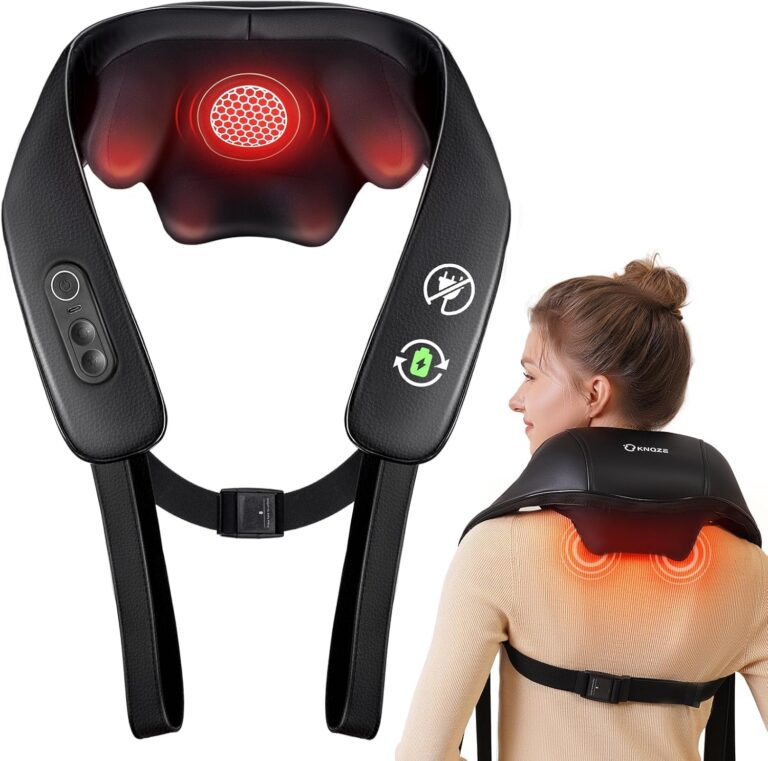
Neck knots specifically: percussion near the cervical spine needs care. A wrap-style shiatsu massager applies sustained kneading pressure rather than percussion, which is easier to use safely on the traps.
Very tight budget: a $10 lacrosse ball against a wall releases upper-back trigger points effectively. It is less pleasant and it works.
Frequently asked questions
Is the Opove M3 Pro 2 strong enough for deep tissue?
For muscle near the surface, yes. For genuinely deep tissue — glutes, hamstrings, thick back muscle — no. Independent assessment puts stall force in the 40–50 lb range against a 50 lb practical threshold, and caliper measurement confirms 12mm amplitude against the 16mm that deep work needs.
How long should I use it on one muscle knot?
Roughly 10–60 seconds of sustained pressure on the spot itself, two or three passes total per muscle. Longer sessions cause soreness without improving the release.
Does the 70 lb stall force claim matter?
It matters if you buy the gun expecting it to handle dense muscle. No independent tester has reproduced the 70 lb figure, and every hands-on assessment puts it below the point where a gun holds speed against heavy pressure. Treat this as a capable upper-body tool rather than a full-body one.
Can I use it on my neck?
On the upper trapezius — the muscle running from neck to shoulder — yes, at low speed. Never on the front or sides of the neck, and never on the cervical spine itself.
Is it worth it over a $30 massage gun?
Generally yes, on stall force and noise. Sub-$40 guns typically measure under 30 lbs and stall almost immediately under pressure, which is why they feel like vibration rather than massage.
How we assessed this
We have not physically tested this device. This review compares the manufacturer’s published specifications against independent hands-on testing from Massage Gun Advice, sets both against what trigger point release actually requires, and reads long-term owner reviews for failure patterns. Our full method is on the how we research page.