

There is a specific frustration to a knot under your shoulder blade. You can feel exactly where it is. You can almost get a thumb on it. And then your arm runs out of angle, your wrist gives up before the muscle does, and you end up pressing on roughly the right area with none of the force required.
Most advice for this skips the two things that actually decide whether you fix it: which muscle it is, and how to get sustained pressure onto it without a second pair of hands. This guide covers both.
First: work out which muscle it actually is
Seventeen muscles attach to the shoulder blade, and at least ten of them can refer pain into the same patch of upper back. “A knot between my shoulder blades” is a location, not a diagnosis — and the release technique differs depending on which muscle is involved.
Trigger points refer pain in predictable patterns. Use the pattern to find the source.
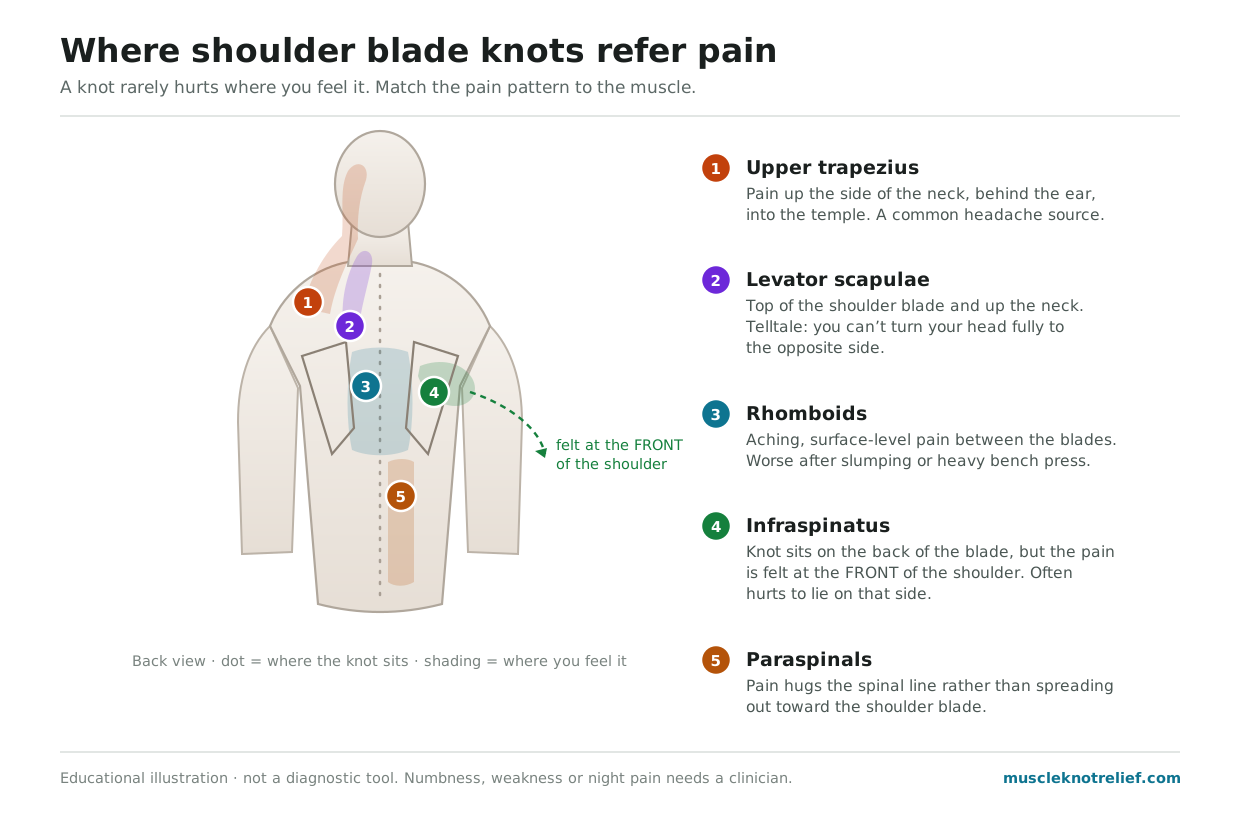
| Muscle | Where the knot sits | Where the pain shows up | Telltale sign |
|---|---|---|---|
| Rhomboids | Between spine and shoulder blade, closer to the blade than the spine | Superficial, aching pain between the shoulder blades | Pain is achy and surface-level rather than deep. Often worse after bench pressing or a day slumped forward |
| Levator scapulae | Just above the top inner corner of the shoulder blade, running up the side of the neck | Top of the shoulder blade, up the side of the neck, sometimes into the head | You cannot turn your head fully to the opposite side. This is the giveaway — rhomboid knots do not restrict neck rotation |
| Upper trapezius | The ridge of muscle between neck and shoulder | Up the side of the neck to behind the ear and temple | Frequently causes headaches. The knot is easy to pinch between finger and thumb |
| Paraspinals | The columns of muscle running either side of the spine | Close to the spine rather than out toward the blade | Pain hugs the spinal line. Worse after prolonged sitting or lifting |
| Infraspinatus | On the flat back surface of the shoulder blade itself | Deep in the front of the shoulder, sometimes down the arm | Pain felt at the front of the shoulder despite the knot being at the back. Often hurts to lie on that side |
Two quick checks separate the most common pair. Turn your head fully left, then fully right — if one side is clearly restricted, suspect levator scapulae. Reach across your chest to touch the opposite shoulder blade — if that reproduces the ache, rhomboids are the likelier source.
Why you cannot reach it
This is not a flexibility failing. Two things are working against you.
- The angle does not exist. Reaching behind your own back puts your shoulder into internal rotation, which shortens the very muscles you are trying to press into. The knot moves away from your fingers as you reach for it.
- Your hand fatigues before the muscle releases. Meaningful trigger point release needs sustained pressure held for tens of seconds. Your thumb, working at a bad angle above shoulder height, gives out long before that.
The fix is not to reach harder. It is to stop using your hands and let a fixed object supply the pressure instead.
The wall and ball method (free, and it works)
Before buying anything, try this. For rhomboid and mid-back knots it solves the problem completely, and it costs whatever a tennis ball costs.
- Stand with your back to a wall and place a tennis ball between the wall and the sore spot. A lacrosse ball gives noticeably more pressure once a tennis ball stops feeling like enough.
- Lean back to trap the ball. Control the pressure by how much body weight you transfer into the wall — step your feet further forward for more, closer for less.
- Roll slowly until you find the spot that is distinctly more tender than the tissue around it, and that reproduces your familiar ache. That is the trigger point.
- Stop moving and hold. Sustained pressure is what releases it — rolling back and forth over it does not. Hold until the tenderness noticeably eases, generally somewhere between 30 seconds and a couple of minutes.
- Breathe out slowly and let the muscle soften into the ball. Tensing against the pressure defeats the point.
- Two or three spots per session is plenty.
Cross your arm across your chest first. This slides the shoulder blade outward and exposes the rhomboids underneath it. Without that, the blade itself shields the muscle you are aiming for and the ball just rolls over bone.
Never put the ball directly on your spine. Stay on the muscle either side of it.
When a ball is not enough
The wall method fails in three specific situations, and each has a different answer.
The knot is too high or too close to the neck
Levator scapulae and upper trapezius knots sit where a wall will not press cleanly — you end up jamming your shoulder rather than the muscle. A hook-shaped trigger point cane lets you apply precise pressure over your own shoulder using leverage instead of grip strength, which is the whole problem solved. A wrap-style shiatsu massager is the hands-free alternative: it applies sustained kneading to the trap without you holding anything at all.
You need pressure you cannot generate against a wall
A percussion massager delivers force without you having to hold a position. For upper-back muscle this works well — the tissue sits close to the surface, so you do not need an expensive high-amplitude device. Our Opove M3 Pro 2 review covers what the specifications actually need to be for upper-body knots, and where the marketing overstates them.
The catch is the same one as your thumb: holding a massage gun against your own upper back is awkward. Use it on the trapezius, where you can reach over the top of your shoulder comfortably, and keep the ball and wall for anything between the blades.
It keeps coming back within days
This is the most common one, and no tool solves it. A trigger point that returns quickly is being recreated by something you do every day. See the prevention section below.
Stretch afterwards, or it comes straight back
Related: if the pain travels up into your head, see whether a trapezius knot is causing your headaches. If it is worst first thing, see what actually causes a morning neck knot.
Releasing pressure on a knot without restoring the muscle’s length is half a job. Match the stretch to the muscle you identified.
- Rhomboids: reach both arms forward, clasp your hands, and round your upper back as if hugging a large ball. Hold 30 seconds.
- Levator scapulae: drop your chin toward your chest and rotate it slightly toward the opposite armpit, then place that hand on your head and let its weight increase the stretch. Hold 10 seconds, repeat three to five times per side. Do not pull hard.
- Upper trapezius: tilt your ear toward your shoulder without rotating, and let the opposite arm hang heavy. Hold 30 seconds.
Static stretches want at least 30 seconds to do anything useful. Ten seconds of bouncing achieves nothing.
Stopping it coming back
Shoulder blade trigger points are almost always a load problem rather than an injury. The usual culprits:
- A monitor that is too low, which pulls your head forward and leaves levator scapulae holding the weight all day. The top of the screen should sit at roughly eye level.
- A bag on one shoulder. Carrying a strap loads levator scapulae continuously, and this is a genuinely common single cause. Switch sides or use both straps.
- Sleeping position. A pillow that lets your head drop sideways holds the muscle shortened for hours at a time.
- Bench pressing without rowing. Heavy pressing with no matched pulling volume overloads the rhomboids in a lengthened position.
- Not moving. Ninety minutes of stillness is the practical limit before postural muscles start protesting. A thirty-second stand and shoulder roll resets it.
When it is not a muscle knot
Most pain between the shoulder blades is muscular and self-limiting. Some is not, and this is the part most articles on this topic leave out entirely.
See a doctor promptly if you have:
- Numbness, tingling or weakness in an arm or hand — this suggests nerve involvement rather than a trigger point
- Pain that wakes you at night or is unrelated to position and movement
- Pain following a fall, accident or lifting injury
- Fever, unexplained weight loss, swelling, redness or heat over the area
- Pain that has not improved at all after two weeks of sensible self-care
- Shortness of breath alongside the pain
Treat as an emergency: pain between the shoulder blades accompanied by chest pressure, jaw or left arm pain, sweating or nausea. Pain referring to the upper back can be cardiac, and it presents this way more often in women. Do not spend the evening with a lacrosse ball working on it — get help.
This article is general information, not medical advice. See our medical disclaimer.
Frequently asked questions
How long does it take to release a knot in the shoulder blade?
A single trigger point often eases within 30 seconds to a couple of minutes of sustained pressure. Getting it to stay gone takes longer — usually one to two weeks of daily release plus stretching, and fixing whatever is recreating it.
Why does it hurt more the day after I work on it?
Almost always because you did too much. Two or three spots, moderate pressure, once a day is more effective than a long aggressive session. If you are bruising, you are pressing far too hard.
Should I use heat or ice?
Heat, in almost every case. Trigger points are shortened, tense tissue and warmth helps them let go. Ice suits acute injury and inflammation, which is a different problem. Ten to fifteen minutes of heat before release work makes the muscle noticeably more willing.
Can I just get a massage instead?
Yes, and a therapist will reach it far better than you can. The limitation is frequency — trigger points respond to regular short sessions, so most people end up doing something at home between appointments regardless.
Is it safe to use a massage gun between the shoulder blades?
On the muscle either side of the spine, yes, at low speed. Never directly over the spine, the shoulder blade bone itself, or the neck. If you have osteoporosis, a bleeding disorder or an implanted device, ask a clinician first.