
Independent · No brand pays for placement
Find the knot. Release it. Keep it from coming back.
Plain-English guides to what actually causes muscle knots, how to release them at home, and which recovery tools are genuinely worth buying. Including the ones that are not.
Start here
Four guides that cover most of what brings people to this site. Each one identifies the muscle first, then tells you what to do about it.
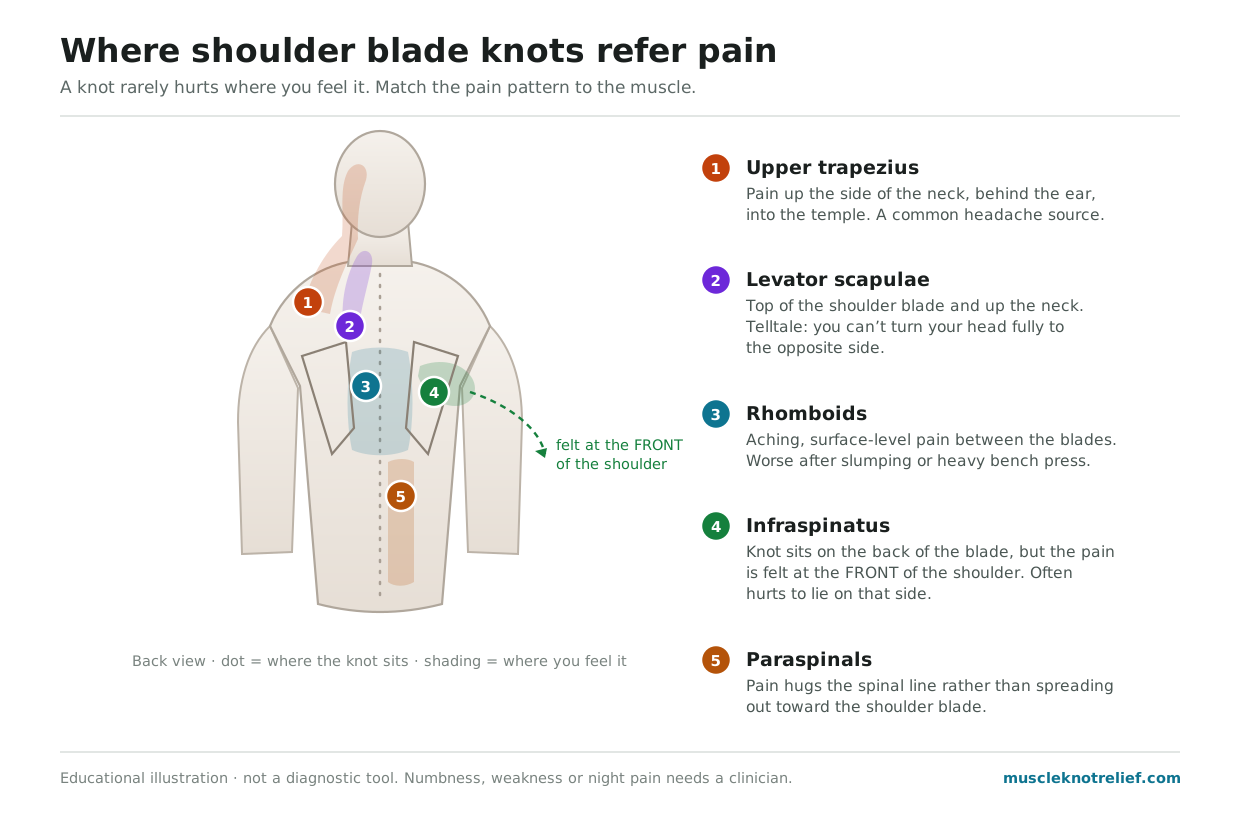
A knot in your shoulder blade you cannot reach
Identify which of five muscles it is from its referred pain pattern, then release it with a wall and a ball.
→ HeadachesCan a trapezius knot cause headaches?
Yes, and the mechanism is well understood. But a tender neck does not rule out migraine, and most articles get that backwards.
→ SleepWoke up with a knot in your neck
What actually happens overnight, why contour pillows do not beat plain foam, and what the evidence says helps.
→ ToolsThe best trigger point cane
Why the two-piece canes snap, which one suits hard pressure, and when an eight dollar ball beats all of them.
→Reviews, with the numbers checked
We compare what a manufacturer claims against what independent testing actually found. Sometimes those are the same. Often they are not.
Opove M3 Pro 2 massage gun
Opove advertises 70 lbs of stall force. No independent tester has ever reproduced that figure, and hands-on assessments put it near half.
Verdict: genuinely good for trapezius and rhomboid knots. Underpowered for glutes and hamstrings, and that is a physics limit, not a quality complaint.
KNQZE neck and shoulder massager
No independent outlet has ever tested it. The node count and heat temperatures are not published by anyone, including the manufacturer.
Verdict: a comfort device, not a treatment. Pleasant and effortless, but the wrap largely misses the levator scapulae.
How we decide what to recommend
Every recommendation starts with the problem, not the product.
- Start from the muscle. Establish what the tissue actually needs, how deep it sits and how much pressure released it in the clinical literature, before looking at a single product.
- Check the specifications against independent measurement. Where a lab has measured a figure, we use theirs, not the brand’s.
- Read the reviews written months later. Motor failures, battery degradation and build problems surface at three months, not in week-one five-star reviews.
- Name the person it is wrong for. A review that cannot say who should skip a product is an advertisement.
Three things we will not pretend
We have not tested these products. We do not have a lab or a force gauge, and we will never write “we tested this” when we did not. What we do is read the clinical evidence, compare it against independent measurements, and say plainly where the marketing does not survive contact with either.
The science of muscle knots is less settled than most sites admit. The tender band you can feel is real. Whether it is a discrete lesion is genuinely contested, and clinicians cannot reliably agree on where trigger points are by touch. We say so, because it changes what you should expect from treatment.
Often the honest answer is to spend nothing. A wall and an eight dollar ball release most upper-back knots. Where a tool genuinely helps we will say which one and why, including when the cheap option is the right one.